
The Painting Under the Painting: Art Forgery, Hidden Masterpieces, Art Crimes & What Collectors Should Know


Can you tell if a painting is authentic? What happens when an old artwork is restored?
And can there really be another painting hiding underneath it?
I'm Meital Regev, an award-winning contemporary coffee artist based in Temecula, California, and I create original surreal artwork by hand-painting with real brewed coffee on archival paper.
I am also fascinated by the strange, hilarious, and sometimes downright unbelievable stories behind the art world.
It all started when someone was VERY interested in my art.
And I don't mean a collector.
A few months ago, I opened my website analytics and noticed something… strange.
Hundreds of visits from one particular country.
In about 15 minutes.
Hundreds.
In.
Fifteen.
Minutes.
My artist brain immediately went:
“Hmm… either I have suddenly become extremely famous in that country… or somebody is up to something.”
That little mystery sent me down an art-world rabbit hole involving art forgery, restoration, authentication, hidden paintings, stolen masterpieces, and the surprisingly complicated question of what makes an original artwork… original.
And if you're an art collector or simply someone who loves owning original artwork, you're going to want to hear this.
Because apparently being an artist in 2026 requires a tiny side career in cybersecurity.
And honestly, I'm getting pretty good at this whole art-detective thing.
Which got me thinking about something much more interesting:
How do you know if a painting is really what you think it is?

Because the art world has some absolutely BONKERS answers.
Sometimes a “copy” turns out to be historically important.
Sometimes there's an entire painting hiding underneath another painting.
Sometimes a painting gets stolen and accidentally becomes more famous because of it.
And sometimes someone spends decades figuring out how to make a painting look old enough to fool experts.
Welcome to the wonderfully weird world of art restoration, hidden paintings, copying and forgery.
Grab your coffee.
This gets good.
Sometimes, the painting is hiding another painting
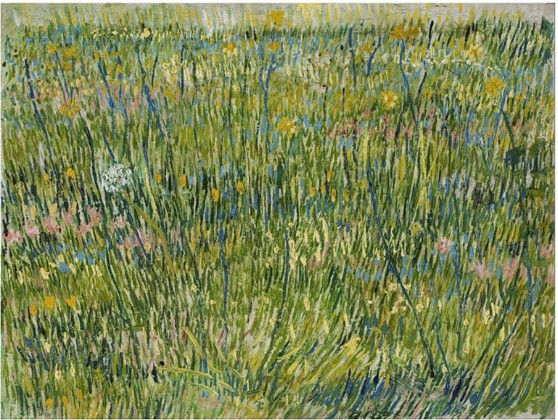
Let's start with Vincent van Gogh.
Van Gogh sometimes reused canvases, painting new works over older ones.
Which means that when scientists examine some of his paintings today, they're not just looking at the painting we know.
They're looking through it.
One famous example is Patch of Grass.
Researchers used X-ray technology to see beneath the visible painting.
And there she was:
A woman hiding underneath the grass.
Not metaphorically.
Literally.
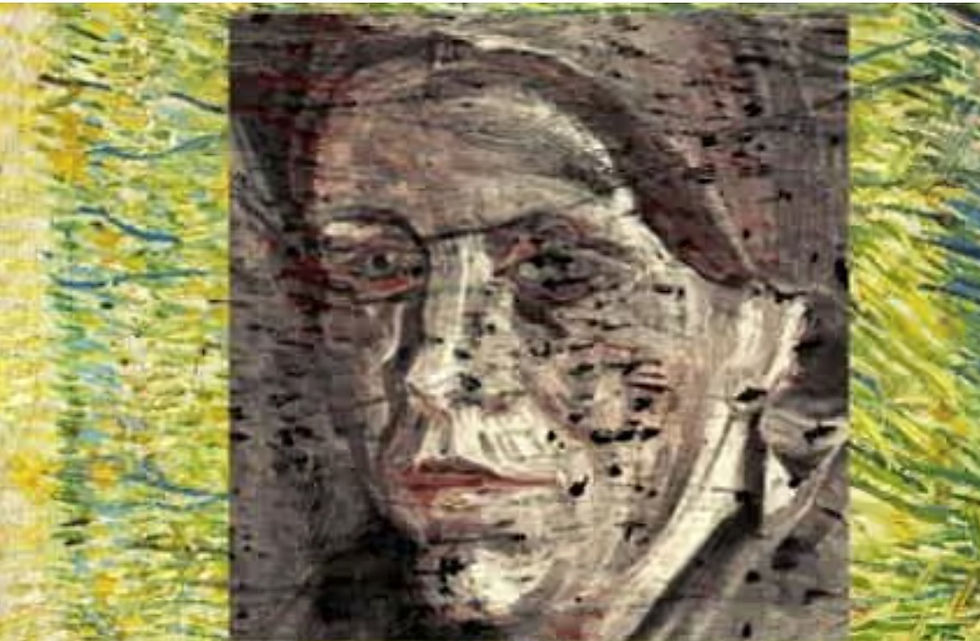
Van Gogh had painted another work on the canvas first and later painted over it.
Honestly?
Relatable.
The difference is that when I change my mind about a painting, I don't accidentally create an archaeological discovery.

Modigliani had THREE paintings hiding underneath
Then things got even crazier.
Researchers examined a Modigliani painting at the Hecht Museum in Haifa using X-ray scanning.
And discovered:
Three hidden paintings.
THREE.
Apparently, Modigliani viewed his canvas as a combination of painting surface, sketchbook, and recycling program.

Was the Prado's Mona Lisa really a copy?
Now let's talk about another famous lady with a mysterious smile.
For years, a painting in Madrid's Prado Museum was considered simply another copy of Leonardo da Vinci's Mona Lisa.
Nothing particularly exciting.
Just another old imitation.
Then the painting was restored.
Layers of dark paint and varnish were removed.
And suddenly…
HELLO.
The landscape behind her reappeared.
Researchers realized the painting had been created in Leonardo's workshop, apparently by one of his assistants, around the same time Leonardo was painting the famous original.
So it wasn't some random person centuries later thinking:
“You know what? I fancy myself a Leonardo today.”
It was much closer to a Renaissance-era behind-the-scenes production.
Which makes you wonder:
How many paintings have been underestimated simply because nobody looked closely enough?
Why was Picasso questioned about the stolen Mona Lisa?
Now let's add theft to the cocktail.
In 1911, the Mona Lisa disappeared from the Louvre.
Yes.

The Mona Lisa was stolen.
And somehow, Pablo Picasso became a suspect.
Not because he stole the Mona Lisa.
But because Picasso had previously acquired ancient sculptures that had been stolen from the Louvre by a man named Géry Pieret.
So when the Mona Lisa disappeared, the police started connecting the dots.
And suddenly Picasso found himself being questioned.
Picasso was eventually cleared.
The real thief was Vincenzo Peruggia, a former Louvre worker who stole the painting and managed to keep it hidden for about two years before attempting to sell it.
And here's the delicious part:
The theft helped make the Mona Lisa even more famous.
The newspapers turned the robbery into a global sensation.
So, ironically…
The thief may have accidentally given the Mona Lisa the world's greatest marketing campaign.
Talk about terrible marketing with excellent results.

What is art forgery, and how do experts detect a fake painting?
A convincing art forgery isn't simply a painting that looks like it was created by someone famous.
Experts can examine the artwork's materials, pigments, canvas, construction, varnish, aging, provenance, and microscopic details to determine whether its physical story makes sense.
In other words:
A good fake doesn't just have to fool your eyes. It has to fool the science, too.
After watching the Insider documentary “How Art Forgery Actually Works,” I realized something:
A convincing fake isn't simply about being able to paint like the original artist.
A really ambitious forger has to recreate the entire history of a painting.

Max Brandrett, one of the best-known American art forgers, described spending years studying old canvases, frames, stretchers and the tiny physical details experts examine.
He eventually became so skilled at creating the appearance of age that he said he could make convincing fakes from entirely new materials.

And that means the forensic detective work doesn't stop at the pretty picture on the front.
How do art scientists authenticate paintings?
Experts can look at:
the canvas and its construction
the stretcher and frame
paint and pigment
varnish
aging and discoloration
the back and edges of the artwork
microscopic details
provenance and documentation
Basically:
The painting has to lie with its WHOLE BODY.

And then there are those tiny signs of age.
Like craquelure - the network of cracks that develops as paintings and their materials age.
And apparently…
even fly poop can become evidence.
Yes. You read that correctly.
Perenyi described seeing tiny fly droppings accumulated on old paintings and studying them as part of understanding how paintings aged.
An occasional dog hair in the painting? Forget the certificate of authenticity - that might be the real proof. 😂
Most people look at an old painting and say:
“Beautiful landscape.”
An art forger apparently says:
“Excellent fly-poop distribution.”
😂

One of my favorite shows is White Collar - a delicious mix of art, crime, deception, and ridiculously clever people.
The show follows Neal Caffrey, a charming and brilliant con artist and art forger who ends up working with FBI agent Peter Burke to catch other white-collar criminals.
Neal can forge a painting, fake a signature, and talk his way out of almost anything - which makes him both incredibly entertaining and slightly terrifying if you're an art collector. 😂
And honestly, writing this blog post made me think of White Collar more than once.
Because when you start talking about art forgery, hidden paintings, stolen masterpieces, and people trying to fool experts… suddenly my favorite TV show feels less like fiction and more like a documentary with better clothes. 😆

Do you enjoy this little art-world rabbit hole? ☕🎨
Join my Collector List for new originals, behind-the-scenes stories, and more art-world secrets delivered straight to your inbox. Come snoop around my studio! 😉
CSI: Art Museum
This is where modern conservation gets really cool.
Restoration isn't just someone taking a tiny brush and giving Grandma Moses a makeover.
Conservators and scientists can use things like:
X-rays.
Infrared imaging.
Microscopy.
Pigment analysis.
Imaging technology.
They can examine what is happening beneath the visible surface without simply attacking the painting with a paintbrush.
And sometimes the evidence completely changes the story.
A supposed copy turns out to be historically significant.
A painting contains another painting.
An artist's abandoned composition appears underneath the final work.
Or scientific analysis reveals that the materials don't match the period they're supposed to belong to.

Restoration vs. forgery: VERY different things
This distinction matters, especially if you're an art collector.
Restoration is about preserving an existing artwork and stabilizing or repairing damage.
Forgery is about deception.
One is trying to preserve history.
The other is trying to manufacture history.
And this is why collectors should care
When you buy an original artwork, you're not simply buying an image.
You're buying the actual object.
You're buying:
The artist's hand.
The materials.
The decisions.
The little imperfections.
The physical surface.
The history.
The story of how that particular piece came into existence.
A digital image can be copied in seconds.
A print can reproduce an image beautifully.
But an original artwork is the one physical object from which all those reproductions came.
Own the original, not just the image
That's part of what makes collecting originals so special.
And now, let's talk coffee. ☕
My originals are hand-painted with real brewed coffee on archival paper.
That means each original has its own physical history:
The layers of diluted coffee.
The darkest passages.
Every original painting of mine is sealed and archival.
The areas where I deliberately leave the paper untouched.
The tiny decisions I make while painting.
The marks created by my actual hand.
The finished original isn't just an image of my artwork.
It is the artwork.

And yes, you can buy a beautiful print of my work, as well.
But if you're an art collector, there's something completely different about owning the original - the actual piece that sat on my studio table while I created it.
My originals are signed, and I offer one-of-a-kind coffee paintings as well as custom originals.
I ship my artwork worldwide and attach a signed certificate of authenticity
And if you're looking for something truly personal, I also create custom original coffee paintings from your ideas, photographs, people or pets.
One last thing…
Remember those hundreds of suspicious visitors from one country?
I'm still watching.
and I did what any responsible artist would do:
I blocked the entire country.
Because apparently I'm now also a part-time cybersecurity professional and Art-crime investigator
Coffee painting was supposed to be relaxing.
Nobody warned me about the detectives.
😂
And the next time you stand in front of an old painting and think:
“I wonder what's underneath that?”
There might actually be something there.
And that, my collector friend…
is where things get REALLY interesting.
☕🎨
Coffee Cheers,
Meital


Comments